
The struggle to keep tables clean: How to deal with sticky surfaces and wasps on terraces
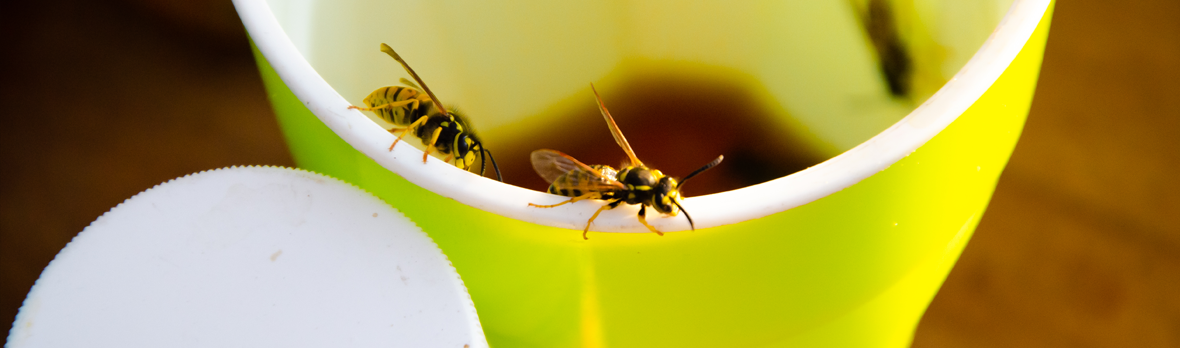
Is there anything that can ruin an outdoor gathering at the height of summer? Yes, there is. Wasps and sticky tables. Where does that sticky substance come from and what to do about it?
Do you regularly experience your outdoor table being sticky and dirty, even though nobody has spilled anything on it? If you created a comfortable seating area under a tree, then it is quite likely that honeydew is to blame.

What is it?
It is a sweet liquid secreted by tiny aphids and other insects that feed on plant sap. Drops of honeydew fall gradually onto everything under the tree – from garden furniture to cars or pavement. At first glance, you might not even notice them, but they very quickly become covered in dust, pollen and other dirt. The result is a sticky layer on the surface that is much harder to clean than ordinary dust. And as if all that was not enough, sweet honeydew is literally a magnetic attraction for wasps, ants and bees.
What to do about it?
As aphids are the main cause of the honeydew layer, the first step is to try to reduce their presence. Try checking your bushes and trees regularly. If you spot any aphids, you can try removing them manually, although this is quite time-consuming. Another option is to attract their natural predators, such as ladybirds, lacewings or hoverflies, for example by growing plants that attract them. However, if the aphid population has already become excessive, you can choose a gentle, ideally organic insecticide that does not kill beneficial insects unnecessarily.
Another option is to clean tables regularly. Honeydew is best removed from surfaces when it is fresh. If you leave it on the table for a few days, dust, pollen and other dirt will stick to it, making this layer much more difficult to remove.

The third option for protecting tables from dirt is to cover them. Either move your garden seating area under a sheltered area – either under a permanent pergola or at least under a seasonal shed or sunshade. Alternatively, there is a slightly more time-consuming solution – shielding the garden seating area with a protective cover. In this case, however, neither the terrace nor its surroundings will be protected.
Watch out for annoying wasps
Even if you manage to keep honeydew and sticky tables under control, that still does not guarantee that wasps and other insects will ignore you on the terrace.

Wasps may love honeydew, but they also enjoy spilled drinks, food and, in fact, anything that we also find attractive. Therefore, getting rid of them completely is not easy, but there are a few tricks that can help.
First of all, try to avoid chemical products that kill wasps. Although they are often a nuisance, they can also be very useful in the garden. They feed on a variety of insects that might otherwise damage the garden and crops – for example, they hunt caterpillars, flies, mosquitoes and aphids, using them to feed their larvae with. In this way, they naturally regulate insect populations without the need for chemical treatments.
Instead, you could plant some herbs on your terrace. Thyme, mint and basil are not attractive to wasps. You can also enhance the pleasant atmosphere on your terrace by using essential oils or candles. Wasps cannot stand the scent of lemongrass or citronella, which is also effective against mosquitoes. They also dislike cloves and citrus fruits.
Another popular home remedy is to stick a few cloves into half a lemon or orange and place it on the table. Many people highly recommend this method, although its effectiveness has not yet been clearly scientifically proven.

Alternatively, add a few drops of clove, mint or eucalyptus essential oil to a diffuser or vaporiser. You could also try buying some ready-made candles that repel insects whilst creating a pleasant atmosphere. A nice-smelling diffuser or candle, a flower and a few napkins will transform your table into a very cosy place to sit.
None of these methods may be entirely effective. However, if you properly combine a few of the hints we have shared with you, you might find the ideal way to create a cosy spot for summer relaxation without any unwelcome visitors.
The Psychology of Shared Bathrooms
How does human psychology work when it comes to shared bathrooms?
Show more
How does the proper placement of cleaning points in production eliminate unnecessary steps for operators?
Efficient production inevitably requires the optimisation of practically everything –...
Show more
How to help employees endure high temperatures and maintain their productivity
The summer months are challenging for employees in many operations. High temperatures reduce concentration, increase fatigue and in some cases they can affect health.
Show more